
-
 Betson V
 - May 21, 2026

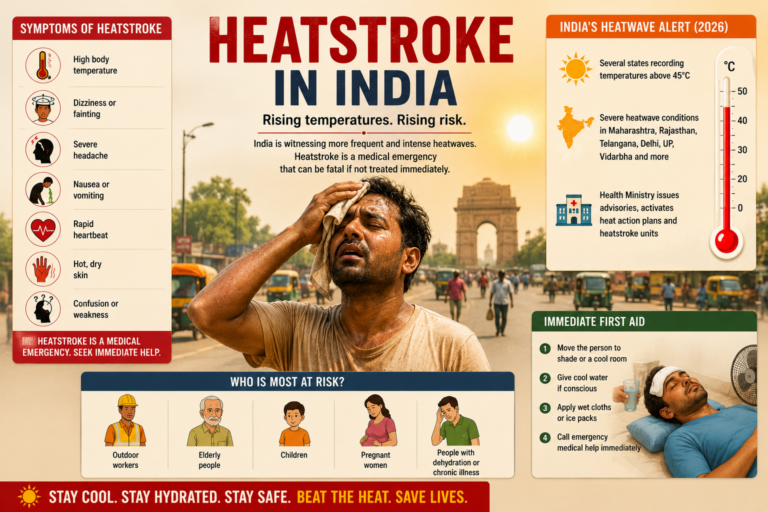
Spending too much time in extreme heat can affect your health. One of the biggest dangers during summer is heatstroke, a condition that happens when the body overheats and cannot easily cool itself immediately. Heatstroke can become a medical emergency if not treated quickly. But a few simple precautions can help you stay safe and healthy during summer.
What Is Heatstroke?
Heatstroke happens when the body temperature rises too high, usually because of prolonged exposure to heat or dehydration. It is more common during heatwaves and can affect anyone, especially children, senior citizens and those with existing health conditions.
Common Symptoms of Heatstroke
- High body temperature
- Dizziness or fainting
- Severe headache
- Nausea or vomiting
- Rapid heartbeat
- Hot, dry skin
- Extreme weakness
*If someone shows these symptoms, immediate medical attention may be needed.
Tips to Protect Yourself from Heatstroke
Drink Water
Dehydration is one of the main causes of heat-related illnesses. Drink water regularly throughout the day, even if you do not feel thirsty. Coconut water, lemon water and ORS can also help maintain hydration.
Avoid Going Out During Peak Heat Hours
The sun is usually strongest between 12 PM and 4 PM. Try to stay indoors during this time whenever possible. If you must go outside, take breaks in shaded or cool areas.
Wear Light and Comfortable Clothing
Choose loose-fitting, light-coloured cotton clothes that allow your body to stay cool. Avoid heavy or dark clothing during summer afternoons.
Wear Sunscreen and Cover Your Head
When stepping outdoors, use an umbrella, cap or scarf to protect yourself from direct sunlight. Sunscreen can also help protect your skin from sun damage.
Eat Light and Hydrating Foods
Fresh fruits like watermelon, cucumber, oranges and muskmelon help keep the body hydrated. Avoid oily, spicy and very heavy meals during extremely hot days.
Take Care While Exercising
Avoid intense workouts in direct sunlight. Early mornings or evenings are safer times for outdoor exercise or walking.
When Should You See a Doctor?
Seek medical help immediately if someone develops confusion, difficulty breathing, unconsciousness or a very high fever during hot weather.
Remember, heatstroke is preventable in most cases. Staying hydrated, avoiding extreme heat and listening to your body can make a big difference during the summer months. Small daily precautions can help protect you and your family from serious heat-related health problems.