-
 Betson V
 - July 13, 2026

The monsoon season brings a refreshing break from the heat but it also brings a sudden spike in sick days. If a child wakes up with a runny nose or a fever, most parents panic, while some think it could just be a regular cold. While they look similar at first, knowing the difference can help you treat it correctly and in time.
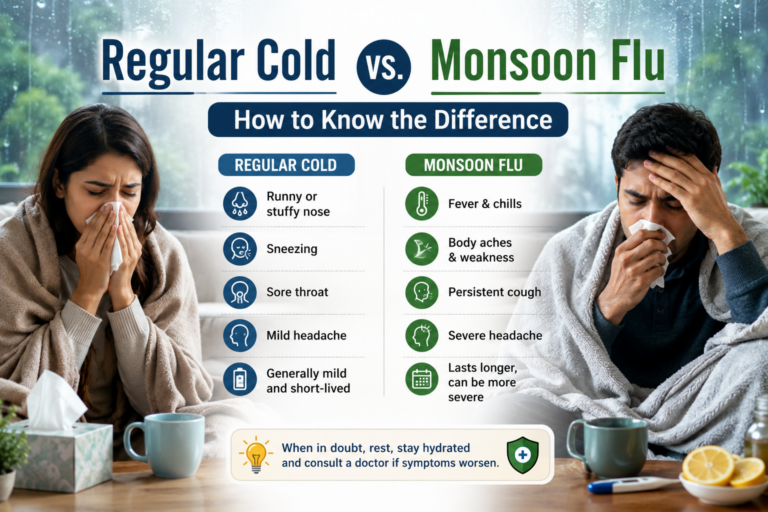
The Common Cold: Mild and Manageable
A regular cold is usually a slow-starter. It is caused by respiratory viruses and typically stays above the neck area.
- The Signs: It starts with a tickly throat, followed by a runny or stuffy nose and mild sneezing.
- Fever: Very rare in adults and if kids get it, it stays quite low.
- Energy Levels: Your child might be a bit fussy but will generally still want to play, eat and move around normally.
- Timeline: It peaks in 2 to 3 days and clears up on its own within a week.
The Monsoon Flu: Sudden and Intense
The monsoon flu (influenza or viral infections spread by high humidity and mosquitoes) strikes like a lightning bolt. It affects the entire body.
- The Signs: It hits suddenly with a high fever (often above 101°F), severe chills, shivering and a dry cough.
- Body Aches: This is the biggest symptom. Flu causes intense muscle aches, headaches and extreme fatigue.
- Upset Stomach: Unlike a regular cold, monsoon viral bugs often come with vomiting or diarrhea in children.
- Timeline: It can make a child feel sick for 5 to 7 days and the weakness can last for two weeks.
If they are running around despite a runny nose, it’s likely a cold. If they are completely exhausted, refuse to eat and have a high fever, it’s the monsoon flu. Always keep them hydrated, avoid self-medicating with antibiotics and consult a pediatrician if a high fever lasts more than three days.